
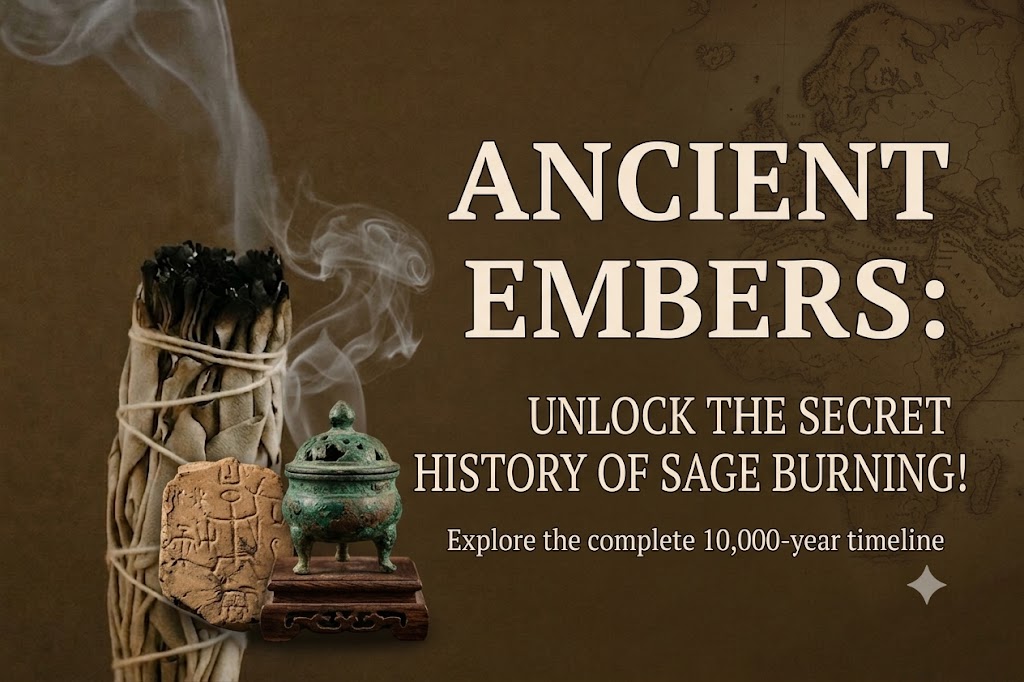
A Comprehensive Guide on Sage Burning History: How it evolved
Sage burning is an ancient ritual, deeply rooted in history. This practice has been used widely across cultures in past and even in modern days due to its significant benefits in medicine, cleansing, healing and spirituality. This article will explore the history of sage burning, cultures that burn sage, sage burning symbolism and modern interpretations.
History of Sage Burning:
Sage burning involves lighting up dried sage that releases smoke which is considered to be sacred, use to purify air and cleanse house. This ritual has been used for centuries in ceremonies particularly by Native American Tribes and in Southwest. The history of sage burning ritual is following:
Ancient Beginnings: In prehistoric times of Neolithic era sage was burned for ritualistic purposes and in burials. In ancient Shamanic traditions sage was to connect to with spiritual world and to purify place. This activity has been keenly observed in ancient Egypt, they used it as a protection from evil spirits to create sacred space and to improve health. Sage was also used in a process of mummification in which they preserved bodies to reflect importance of both life and death. Egyptians burnt sage in temples and in religious ceremonies that was considered to offer divine and carry prayers The Romans also used sage for healing purposes and to eliminate negative energies. Greeks used it in everyday life as they believed it improves overall health. Both Roman and Greeks believed sage to have purification properties and used it in rituals and ceremonies to purify sacred places.
Middle Ages: Sage became a staple in European households during middle ages. It was used in cooking as well as for protection against witchcraft and plagues. It was a part of famous concoction “Four Thieves Vinegar”, a guard form Black Death. Similarly it was also used in folk magic and witchcrafts. Monasteries also grew it due to its medical properties and uses in various aspects.
During Renaissance and In Modern Times: Sage was valued in Renaissance, for its vital role in culinary and medicine. The properties and uses of sage were documented by Herbalist Nicholas Culpeper. He associated sage with the planet Jupiter in astrology. His documentation reflects value of sage as an herbal medicine. In modern ages of 1960s and 1970s it emerged as a potential herb in holistic and metaphysical health and indigenous seemed interested in this practice.
Origin of Sage Burning
Sage burning, also known as smudging has been widely used in cultures and traditions in burning purpose due to its aroma and powerful significance in heath and spiritual cleansing. It has been seem to originate from indigenous North American and Mesoamerican traditions, highlighting its cultural sensitivity and importance in human history. Here is the detail about sage burning ritual origin:
Indigenous of Native America:
Many Native American Tribes practice burning sage for centuries due to its potential benefits. White sage has been commonly used by tribes such as Lakota, Cheyenne and Navajo as a sacred herb for healing and cleansing properties. The significant part of this practice is sage smoke which is considered to bring spirituality in prayers. Archeological researches and history has shown that sage burning by Native Americans was practice long before European contact. It is performed in rituals such as sweet lodge, healing sessions and vision quests foe purification and healing. The ritual of burning sage is considered to provide emotional and mental support as a part of holistic health. Many Native Americans believed it as bridge to connect to their forefather and sacred spirits. The sage smoke is considered to be used as a protection tool from negative energies and harmful entities.
Mesoamerican Cultures:
In Mesoamerica, the sage herb is considered to be sacred particularly by civilizations such as Aztec and Mayan. They burned sage to create deep connection with God and purify space. The sage smoke was believed to have potential that can clear negative energies and influence harmful spirits. This vital property of sage served as a powerful tool in various ceremonies and ritual. It not only helps in spiritual cleansing but also has potential benefits in health. Burning sage often reduces stress and its strong aroma soothes the soul, elevating anxiety and depression. It is a religious practice for many indigenous communities and a way to create spiritual connection with their forefathers.
Sage burning has been spread through these origins and evolved as an influential practice. It varies across various traditions, these traditions influenced individuals to perform sage burning which kept it alive and has become a part of modern day life.
Cultures that Burn sage:
- Native American Tribes: Sage burning is considered to be a sacred practice among Native American Tribes. They burn sage in ceremonies for blessings and to cleanse place, people and objects. It is believed as a sacred herb due to its distinct properties such as purification and healing. Native Americans use different types of sage like white sage, desert sage and lavender sage based on their traditions. Although it is an ancient activity yet many tribes have preserved it and inherited to their generations.
- African Culture: In Africa sage is used to seek protection and guidance from their ancestors, the sage smoke carry prayers to their ancestors. The sage burning ritual is believed to clear negative energies on specific events such as birth, weddings and funerals. Africans utilize sage in medicines and spiritual healing to restore balance. It is also used in Cultural practices such as Zulu and Yoruba. In Zulu culture a type of sage called impepho is burned with other herbs in rituals to communicate with ancestors. Sangomas, who are traditional healers’ burn sage to link with spirit world. In Yoruba religion, it is burned with other herbs to worship Orisha (deities) to attract their presence. Yoruba people also use sage to honor and worship Egun.
- Afro Caribbean Culture: Afro Caribbean culture of burning sage is a unique tradition as it blends of African, Native American and European influences of burning sage. The African diaspora brought this ritual to Caribbean during transatlantic slave trade and it became a part of the Afro Caribbean traditions. This practice is performed in many religious ceremonies. In Haitian Vodou, sage is burned to emphasize presence of spirits and purify space from negativity. In Caribbean, it is burn in a spiritual practice called Obeah for protection and cleansing. Divination rituals also use sage to gain knowledge from spiritual entities.
- Ancient Chinese Culture: Chinese used sage in medicine due to its potential benefits in health. Chinese used sage in temples during religious activities to purify air and promote positivity. In Chinese culture it serves as a holistic approach to health and divinity.
- Celtic and Druidic Tradition: Celts believe in nature and consider sage as a sacred plant. They used it in Celtic herbalism due to its ability to heal and purify. Celts burned sage to bring wisdom and dispel negative energy. Sage and other herbs were burned in ceremonial fires of Celtic festivals such as Samhain (Halloween) and Beltane to honor gods and nature spirits. Meanwhile, Druidic believed that burning sage enhance spiritual vision and could covey prayers to high powers. Druidic used it in their ceremonies to bless participants and ensure well-being of the community as skilled herbalists. Today Neo Druids practice sage burning as a significant ritual to create ecological balance and environmental stewardship.
- Middle Eastern Cultures: Sage is burned in Middle East, due to its potent medical and cleansing properties. Middle East involves blends this tradition, highlighting its significance in cultural ceremonies. Some Middle East communities use sage for culinary purpose to add flavor to their recipes and healthy diet. Jewish burn sage in specific rituals and religious acts like Passover. Whilst burning sage in Islamic culture is also common however it also involves other aromatic substances like myrrh.
These cultures reflect the historical influence of sage burning and have preserved this tradition. From Native America to Middle Eastern traditions these cultures convey respect and connection with the ancient ritual of sage burning.
Burning of Sage Symbolism
Burning of sage symbolism depends upon the cultural contexts and personal beliefs. However it is mostly symbolized as following:
- Purification and Cleansing
Burning sage is mostly as a symbolism of purification. Mostly sage is burned is cleanse house and to purify space from airborne bacteria.
- Healing and Protection
Burned sage releases smoke which is a symbol of protection and healing. Sage burning helps to heal patient and protect individuals from negative influences.
- Spirituality and Transformation
It symbolizes spirituality and is considered as a source of communication with spiritual world. The sage smoke carries prayers to God and higher powers. The sage burning also symbolizes renewal and transformation as the sage smoke sheds the old energies and infuses the new energetic spirit.
Symbolism in Different Cultures
In Native American Cultures sage is a symbolism of protection and purification. The sage smoke is considered sacred that is used to ward off negative energy and create a space for positive one. In Celtic tradition it is believed to be a symbol of protection and wisdom. It is used to protect against negative energy and bring sacredness. Meanwhile, in Modern Spirituality sage burning is a symbol of healing that helps individual to be mindful and create a connection with their inner self’s.
Symbolism in Art and Literature
Sage burning is powerful symbol in art and literature. The paintings and sculptures signify its connection with spirituality. Artists use it as a symbol of mystery and supernatural thing. In literature it symbolizes heritage, transformation and spiritual connection. Characters in literature may burn sage to honor the ritual, promote well-being or to communicate with the spirits.
Modern Interpretations
Sage burning practices have been kept alive by above cultures and have been adapted by modern cultures across the world. Although this activity faced many allegations yet it evolved through times. The journey of the rituals and modern interpretations are given below:
New age movement:
At the start of 1970s, sage burning emerged as a potential practice due to its spiritual cleansing and health benefits in various aspects of life. It influenced individual’s to practice it into their daily life as it connects with nature and has healing properties. The new age authors such as Carlos Castaneda, through their writings popularized sage burning and other activities.
Cultural misappropriation and legal challenges:
Native Americans took great interest in sage burning and were sensitive to it. They were highly concerned with the misuse or commercialization by other communities. Indigenous leaders try their best to engage border public on the proper use of sage and to educate about the importance of the tradition. Sage burning including many other Native American religious and traditional practices was restricted under U.S law until Freedom Act of 1978. These challenges reflect the significance of this indigenous tradition. The colonization of the Americas ensured the survival of sage burning ritual, despite the indigenous communities was suppressed yet saved the tradition.
Modern practices:
Now a days individuals practice sage burning in their daily life due it its significant benefits and as an ecological practice. They use sage for healing, meditation and well-being, eliminating harmful and negative energies. People have also adopted it as a religious practice, creating a sacred space for various ceremonies. Today individuals customize this ritual with modern adaptations such as using crystals or plying specific music to enhance the effect.
Additional FAQS
Who started sage burning?
Sage burning is an ancient practice that was performed by Egyptians and Romans which lead groundwork for later traditions. Indigenous of North America used sage as a sacred herb to connect with nature which reflects resilience of indigenous people.
Where did burning sage come from?
According to archaeological researches ancient civilizations like Egyptians, Greeks and Romans used sage for medical and spiritual benefits. The evidence was found in ancient tombs, temples and domestic sites.
What is the symbolism behind the burning sage ritual?
The symbolism behind the burning sage varies among different cultures. It symbolizes purification, well-being, spiritual connection, healing, protection and renewal. Various cultures symbolize sage burning according to their beliefs.
Where did sage burning originate?
Sage burning has its roots in Native America. This tradition was passed down to generations as a religious and cultural practice. It evolved as a sacred practice to cleanse, heal and connect with spiritual world.
We hope this article helped you in developing insights about sage burning history and its evolution in modern age. Visit our related articles to gain valuable insights about sage burning.





Lorem ipsum dolor sit amet, consectetur adipiscing elit. Fusce vitae tortor varius, blandit turpis nec, condimentum ipsum. Maecenas augue augue, maximus sed gravida a, consequat sed lectus. Suspendisse ac finibus metus. Nulla id ante dolor. Sed vel ante at nisi tincidunt hendrerit ut nec ipsum. Phasellus magna nisi, porta at ante sit amet, facilisis aliquet nibh. Sed in dolor bibendum, eleifend tortor convallis, congue justo. Vestibulum eros est, rhoncus non purus eget, vehicula rutrum elit. Mauris a nunc eros. Nullam aliquam velit tempus imperdiet pulvinar. Proin viverra justo ac lorem venenatis faucibus.
Etiam non vehicula ipsum. Pellentesque pharetra, enim quis bibendum cursus, odio nulla accumsan ante, at efficitur tortor mauris sed metus. Morbi ultricies pharetra est eget vulputate. Suspendisse potenti. Ut posuere ligula ipsum, vitae tempor mauris lobortis et. Mauris auctor
But I got a dreaming and sprawling about one night, and somehow, Sam got pitched on the floor, and came near breaking his arm. Arter that, Sal said it wouldn’t do.
By the light of the now brilliant moons I saw that he was but a shadow of his former self, and as he turned from my caress and commenced greedily.