
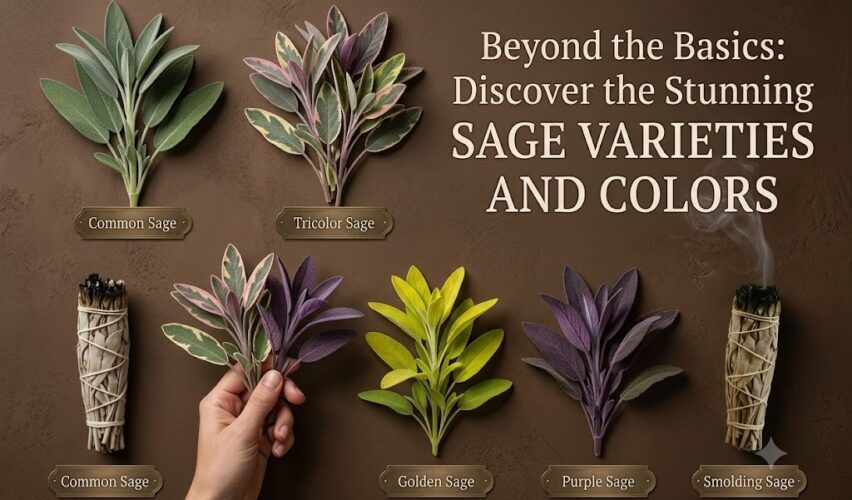
Sage Varieties & Colors Explained
White, black, blue, red, and garden sage — what’s actually what
Why the Names Get Confusing
“Sage” is used loosely to describe plants from several different genera and traditions, which is why people often ask whether “red sage” or “black sage” can be burned the same way as white sage. The short answer is: not always — some of these plants aren’t even related to each other botanically. Here’s a clear breakdown.
White Sage (Salvia apiana)
Native to the coastal scrub of Southern California and Baja California. Pale, almost silvery-white leaves and a strong, resinous aroma when burned. This is the species most commonly sold as ceremonial “smudge sticks” and the one most affected by overharvesting concerns (see “Cultural Respect & Appropriation”).
Black Sage (Salvia mellifera)
Often grows alongside white sage in the same coastal scrub habitat and is sometimes confused with it. Black sage has narrower, darker green leaves and a sharper, more herbal scent. It’s an important bee-forage plant, and some California Indigenous communities use it in smaller ceremonial amounts, though it’s less commercially common than white sage.
Blue Sage / Grandfather Sage (Salvia clevelandii)
A fragrant Southern California native with blue-violet flowers, often blended with white sage bundles for a sweeter, more floral scent. It’s sometimes called “Cleveland sage” after the botanist who first classified it.
Garden or Culinary Sage (Salvia officinalis)
The grocery-store sage used in cooking. Grey-green, slightly fuzzy leaves and a milder, earthier aroma than white sage. It grows easily in home gardens almost anywhere with good drainage and full sun, making it the most sustainable option for both cooking and smoke cleansing.
“Red Sage” — A Different Plant Entirely
This is the one to watch for: red sage, or danshen (Salvia miltiorrhiza), is a Chinese herbal medicine plant traditionally used in tinctures and teas for circulatory support, not for burning. It isn’t part of North American smudging traditions, and using the name “red sage” interchangeably with white or black sage is a common mix-up worth avoiding.
Comparison at a Glance
Type | Leaf Color | Native Region | Primary Use | Scent |
White Sage | Silvery white | S. California / Baja | Ceremonial | Resinous, strong |
Black Sage | Dark green | S. California coast | Ceremonial (limited) | Sharp, herbal |
Blue Sage | Grey-green / blue flowers | S. California | Ceremonial blend | Sweet, floral |
Garden Sage | Grey-green | Mediterranean (widely grown) | Cooking + cleansing | Earthy, mild |
Red Sage (Danshen) | Green leaves, red root | China | Herbal medicine (not burned) | N/A |