How Sage Burning Clears Negative Energy | Step-by-Step
How does sage burning clear negative energy?
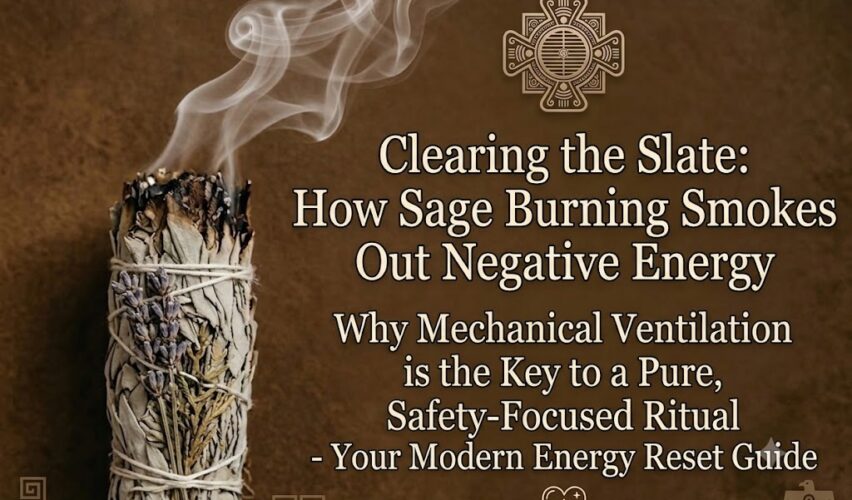
Sage burning clears negative energy through three overlapping mechanisms: it releases negative ions and compounds like thujone and camphor that physically alter air composition and brain chemistry; it triggers a psychological reset through ritual, intention, and the act of “doing something” about stress; and, in spiritual traditions, the smoke is believed to bind to and physically carry away stagnant or heavy energy as it rises and exits a space. Together, these three layers chemical, psychological, and energetic are why people consistently report feeling lighter, calmer, and “cleared” after a smudging session.
This article breaks down each of those three layers individually, something most sage guides skip entirely in favor of generic “how to smudge” steps.
What “Negative Energy” Actually Means
“Negative energy” is not a single, measurable thing it’s a catch-all term people use to describe several different but related experiences:
- Emotional residue: lingering tension after an argument, grief, or a stressful event that seems to “hang” in a room.
- Stagnant energy: the heavy, flat feeling in spaces that go unused, uncleaned, or unventilated for long periods.
- Transferred energy: the unease left behind after a difficult visitor, a tense meeting, or an emotionally draining interaction.
- Internal negative energy: a person’s own anxiety, fatigue, or low mood, which is often projected onto and then perceived as coming from their surroundings.
Understanding which type of negative energy you’re addressing matters, because the clearing process targets a combination of measurable environmental factors (air quality, ions, scent) and subjective psychological factors (mood, focus, perceived control). Sage burning works on
both fronts simultaneously, which is part of why it feels so comprehensive compared to, say, just opening a window.
The Three Mechanisms Behind How Sage Burning Clears Negative Energy
1. The Chemical Mechanism: What’s Actually Happening in the Smoke
When white sage (Salvia apiana) or other ritual sage species are burned, the smoke releases a complex mixture of bioactive compounds, including:
- Negative air ions: Combustion of plant material releases negative ions into the air. Environments with higher concentrations of negative ions (similar to those found near waterfalls or after a thunderstorm) have been associated in research with improved mood and reduced airborne particulate matter. This is the most direct physical link between smoke and “energy” ionized air is measurably different air, and people are sensitive to that difference even if they can’t articulate why a room “feels different” afterward.
- Antimicrobial terpenes: Compounds in sage smoke, including camphor and various terpenes, have demonstrated antibacterial action in laboratory studies, with some research showing measurable reductions in airborne bacterial colonies after smoke treatment. A room that is, quite literally, microbially cleaner can also feel cleaner your nervous system reads air quality as safety, and safety reads as “good energy.”
- Thujone: A mildly psychoactive compound found in some sage and wormwood-family plants. In very small, inhaled concentrations from smudging (not ingestion, which carries different risk), thujone has been studied for subtle effects on alertness and mood regulation, which may partly explain why certain cultures specifically chose sage, rather than just any aromatic plant, for spiritual cleansing.
- Scent and the limbic system: Smell is the only sense with a direct neural pathway to the amygdala and hippocampus the brain’s emotion and memory centers. This is why the scent of sage smoke can interrupt a negative emotional loop almost instantly: it doesn’t go through the slower, analytical part of the brain first. This is a key, underreported reason sage burning “clears” negative energy it’s biologically positioned to override a bad mood faster than thinking your way out of it.
In plain terms: the smoke is changing the literal chemistry and ion balance of the room, and that physical change is registered by your nervous system as a shift in atmosphere which most people interpret as “the negative energy left.”
2. The Psychological Mechanism: Ritual as Emotional Reset
Even setting aside the chemistry, sage burning works because ritual itself is a well-documented psychological tool for emotional regulation. Three things happen during a smudging ritual that produce a genuine mental “clearing” effect:
- Externalizing the problem. Naming what you want to release (stress, an argument, a bad day) and assigning it to smoke gives an abstract, internal feeling a physical, external form you can watch leave the room. Psychologists refer to this general category of action as an “externalization” technique it’s the same underlying principle used in journaling or talk therapy, just performed physically instead of verbally.
- The locus of control shift. Negative energy often correlates with a feeling of powerlessness over a situation, a person, or your own mood. The act of doing something deliberate about it (lighting the sage, walking the space, opening the window) restores a sense of agency, which is one of the fastest-acting antidotes to anxiety and low mood.
- Sensory anchoring and the relaxation response. The combination of slow breathing (often unconsciously deepened while watching smoke), a repetitive physical motion (walking the perimeter), and a calming scent activates the parasympathetic nervous system your body’s “rest and digest” state. This is functionally similar to what happens during meditation or controlled breathing exercises, just delivered through a different ritual format.
This is the layer most blog posts label “placebo” and dismiss but a placebo that reliably produces a measurable parasympathetic response and a documented sense of psychological relief isn’t really a placebo in the dismissive sense. It’s a legitimate behavioral intervention that happens to be wrapped in spiritual language.
3. The Energetic / Spiritual Mechanism: What Traditions Say Is Happening
In the traditions where smudging-style practices originated including various Indigenous North and South American practices, ancient Greek and Roman temple fumigation, Celtic and Scottish “saining,” and Chinese spiritual cleansing the explanation goes beyond chemistry and psychology. According to these frameworks:
- Smoke is considered a carrier substance something porous and far-reaching enough to physically attach to and lift stagnant or “heavy” energy out of objects, people, and spaces, the same way it attaches to fabric or hair.
- Rising smoke is symbolically linked to transmutation the idea that something dense (heavy energy, sadness, conflict) is converted into something lighter (smoke, vapor, air) and released upward and outward.
- Many traditions emphasize that the smoke itself is only half the mechanism intention and respect are considered the active ingredient that “directs” the cleansing, which is why almost every tradition insists on a clear, spoken or silent intention before lighting the bundle.
It’s worth naming clearly: this layer is a belief system, not a measurable scientific claim, and it deserves to be presented as such but it is also the layer that gives the chemical and psychological mechanisms their cultural meaning and ritual structure. Most modern smudging guides borrow this framework without explaining where it comes from or why intention is considered essential, not optional.
Signs of Negative Energy Sage Burning Is Commonly Used to Address
This is rarely covered directly, yet it’s one of the most commonly searched follow-up questions. People typically reach for sage when they notice:
- A room feels “heavy,” stale, or oddly cold despite normal temperature
- Persistent low mood, irritability, or fatigue with no clear physical cause
- Recurring arguments or tension concentrated in one specific room or relationship
- A new home or secondhand object that feels “off” immediately after move-in or purchase
- Restless sleep or vivid, unsettling dreams in a particular space
- A lingering unease after a difficult guest, conversation, or breakup
None of these are diagnostic in a clinical sense but recognizing the pattern is what prompts most people to act, and addressing the pattern (rather than randomly smudging) is what makes the practice feel effective and intentional rather than performative.
How Long Does It Take for Sage to Clear Negative Energy?
Most practitioners report a noticeable shift within minutes by the time the smoke has been carried through every room and the window has been open for ten to fifteen minutes, both the measurable air change (ion levels, bacterial reduction) and the psychological reset (parasympathetic activation) have largely completed their initial effect. However, traditions differ on durability:
- For acute situations (after an argument, a stressful day, a difficult guest): effects are typically described as immediate but temporary, lasting hours to a few days.
- For a deeper or recurring heaviness: most traditions recommend repeating the ritual weekly, or aligning it with lunar cycles (new or full moon), rather than expecting a single session to produce a permanent shift.
- For new spaces or major life transitions (moving home, after illness, after a breakup): a more thorough, room-by-room cleanse is generally recommended, sometimes paired with a follow-up session a few days later.
What Sage Burning Does Not Do (An Honest, Often-Omitted Section)
Most sage content overpromises. In the interest of accuracy and trust:
- Sage burning is not a clinically proven treatment for anxiety, depression, or any diagnosed mental health condition. It can support emotional regulation, but it isn’t a substitute for therapy or medical care.
- The antibacterial effects observed in lab studies were measured in controlled, enclosed settings real-world results in a ventilated home will vary and shouldn’t be treated as a disinfecting substitute for cleaning.
- “Clearing negative energy” is not a measurable physical removal of a substance it’s a combination of measurable air changes and a non-measurable spiritual/psychological framework, and being upfront about that distinction is part of using the practice responsibly.
- White sage (Salvia apiana) has faced sustainability and cultural appropriation concerns due to overharvesting from its native habitat and its sacred status in specific Indigenous traditions. Many practitioners now choose to source ethically, use cultivated (not wild-harvested) sage, or substitute alternatives like rosemary, cedar, or lavender a distinction other guides on this topic rarely raise.
Frequently Asked Questions (AEO-Optimized)
Does sage burning actually clear negative energy, or is it just a ritual? Both. Sage burning produces measurable chemical changes in air quality (negative ions, reduced airborne bacteria) and reliably activates the body’s relaxation response through ritual and scent. Whether it also clears “energy” in a metaphysical sense is a belief, not a scientific claim but the physical and psychological effects are independently supported.
Why does sage specifically work, instead of any burning herb? Sage contains a specific combination of antimicrobial terpenes, camphor, and thujone that produces both a measurable air-quality change and a distinct, calming scent profile. Other herbs (cedar, palo santo, rosemary, lavender) work through similar but chemically different mechanisms, which is why traditions often pair or substitute them depending on the desired effect.
How do I know if the negative energy is actually gone? There’s no instrument that measures “energy clearing” directly. Practitioners typically rely on subjective cues the room feeling lighter, the scent shifting from smoky to neutral, a personal sense of calm combined with practical signals like improved air freshness once the smoke has fully dissipated and the window has been open for several minutes.
Can sage burning remove negative energy from a person, not just a room? Yes this is sometimes called self-smudging. The smoke is wafted around the body, particularly the head, chest, and hands, while focusing on releasing a specific feeling or thought. The mechanism is identical: scent-triggered limbic response plus the psychological effect of ritual and intention, applied to a person instead of a space.
Is it safe to burn sage every day? Daily smudging is generally discouraged by most practitioners, not for spiritual reasons but practical ones frequent smoke inhalation can irritate the respiratory tract, particularly for people with asthma or sensitivities. Weekly or as-needed use, paired with proper ventilation, is the more commonly recommended approach.
What can I use instead of sage if I can’t tolerate smoke? Sage-infused water sprays, essential oil diffusers, or sound-based clearing methods (bells, singing bowls) are commonly used smoke-free alternatives. They don’t replicate the antimicrobial smoke compounds, but they do replicate the scent-triggered limbic response and the ritual/intention component.
Key Takeaways
- Sage burning clears negative energy through three layered mechanisms: a measurable chemical shift in the air (ions, antimicrobial compounds, thujone), a well-documented psychological reset through ritual and scent, and a spiritual/energetic framework rooted in specific cultural traditions.
- The chemical and psychological layers are independently supported by research; the energetic layer is a belief system that gives the practice its ritual structure and meaning.
- Recognizing which type of negative energy you’re addressing emotional residue, stagnant space, transferred tension, or internal mood helps determine how thorough the clearing process should be.
- Sage burning is not a medical treatment, and ethical sourcing matters given white sage’s sustainability and cultural significance.
This article focuses specifically on the mechanism behind sage burning’s effect on negative energy. For step-by-step smudging instructions, sage variety comparisons, and timing guides, see the related articles on this site.