
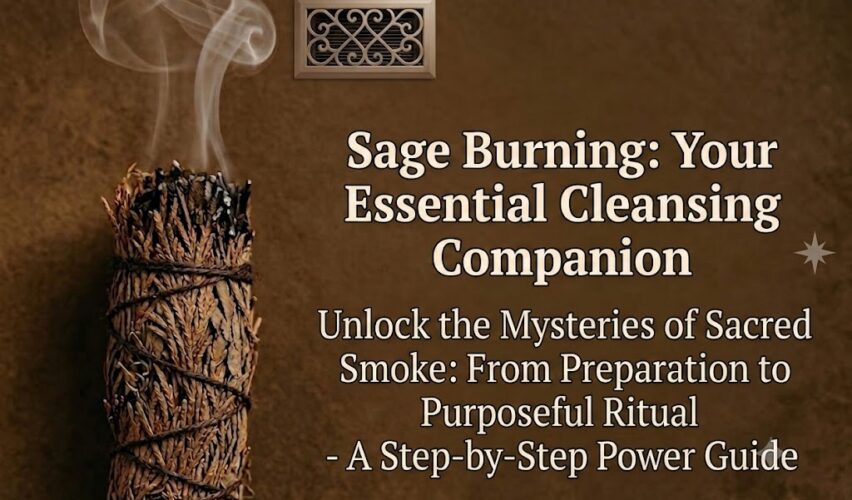
Guide to Sage Burning (5minutes read): All you need to know about Burnable Sage
Do you want to get rid of negative energy or looking for timeless meditation? Sage burning also known as smudging is an ancient ritual that can elevate your house and can calm your soul. In this guide, we will explore the benefits of burning sage and how you can perform this venerable activity in your modern-day life.
What is sage?
Get to know about sage burning, sage is the essential element that has been used for centuries for spiritual and cleansing purposes.
Sage is a natural herb with an aromatic smell. It is native to the northern Mediterranean region and has vast uses in health, cleansing, medicine, and cooking. The official name for sage is Saliva. Saliva has several spices that are also called sage plants. Additionally, the sage smoke helps to deal with various health’s related problems. Ancient people believed it as a holy herb. Moreover, people cultivate it in their gardens for its sweet scent and savory leaves to add a flavor to their recipes. In past centuries, people used it as remedy for wasp stings, sore throat, and hair care, also for nervous conditions.
What is Sage Burning?
Sage burning is a centuries-old ritual practice by Native Americans. It involves the burning of specific herbs (i.e. white sage).
Sage burning, also called smudging, is the practice of igniting dried white sage (Salvia apiana) leaves and using the smoke to cleanse a space, object, or person. It originates from Indigenous ceremonial traditions of California and the Great Basin, where it is used for purification and prayer. Modern users burn sage for perceived stress relief, mood lift, and “energy clearing,” though scientific evidence for spiritual claims is limited, and the smoke itself carries measurable respiratory risks from fine particulate matter (PM2.5)
Nowadays it has emerged as a renowned exercise embraced by various cultures, looking for natural ways to boost their surroundings. When you burn sage leaves or sage smudge sticks, it discharges an aromatic smell that is assumed to bring sacred energy and also purify the house. Sage burning has been adopted by various cultures as a part of tradition. Sage burning is a versatile act and accessible tool for those who believe in ancient techniques of extracting negative energy. Sage burning enables your soul to relax in a natural way. In instance sage burning offers spiritual and emotional support. While reading this article you will acknowledge the existence of Sage burning and why it is used in numerous religions.
What is sage without burning?
Sage burning is an ancient activity however there are Nemours other methods that you can use without putting sage on fire such as sage essential oil and sage tea.
What is virtual sage burning?
It is a digital practice of sage burning utilizing apps, websites, VR and AR technologies. This remote practice leverages purification in a convenient way.
Where I burn sage?
Sage burning in other languages
Sage burning is referred with various names around the world in different languages and cultures. Some common examples are given as follows:
- In English :Sage burning, Smudging
- In Spanish: Quema de saliva, Sahumar
- In French: Brûlage de sauge, Fumingation à là sauge
- In German: Salbei räuchern, Salbei verbernnen
- In Italian: Bruciatura di salvia, Fumigazione con salvia
- In Portuguese: Queima de salvia, Defumaco com salvia
- In Russian: Kurenyiye shalfeya, Sozhzheniye shalfeya
- In Hindi: Rishi jalana, Dhoopan
You can also check out our related article for specific information regarding sage burning in other languages.
Origin of Sage Burning
Sage burning is a historical method practiced by North Americans, but a similar practice has been observed in other nations. Native American tribes performed sage burning in ceremonies and daily life. They consider it as a sacred herb used for protection against evil spirits. Other cultures such as Greek and Roman used sage as a powerful herb for endorsing wisdom and harmony. In Asia Significance of Sage burning is encouraged in Chinese culture and Hinduism. Chinese uses sage herb in medicine and incense in rituals. While Hindu burn sage in temples during religious ceremonies to create spiritual connection and purify the space. It also resembles with Australian smoking ceremony sometimes known as saining. Sage burning has spread globally in recent decades; the practice of sage burning has been incorporated by many people of modern age regardless of its traditional background.
Do Native Americans use sage?
Yes, many Native American Tribes practice sage burning as a tradition for spiritual cleansing and various purposes. Sage holds significant importance and is often used in rituals and everyday life for protection and purification.
Sage Burning Religion
Particularly indigenous people of Native America perform sage burning to connect with nature. They use burn sage as a medium to communicate with their ancestors in a spiritual way. In East Asia, Taoism and Buddhism practice sage burning to pay respect to their forefathers and invoke spiritual blessings. Pagans and New age also consider Sage burning a healthy and natural technique of meditation. Christian’s burn sage following the Bible to approach God, although this activity has been rejected by many Catholics based on their perspectives as it involves witch crafting. In essence sage burning has cross culture adaptation and has been valued for its spiritual cleansing and therapeutic benefits.
Is sage burning in the Bible?
Sage burning is not explicitly mentioned in Bible; however practice of burning incense made from specific spices is found in Old Testaments of the Bible. Incense burning was a significant part of Jewish religious rituals.
Does burning sage go against Christianity?
The acceptability of burning sage in Christianity depends upon the individual perspectives and personal beliefs. Some Christians may embrace it as a traditional activity and some may deny it due to spell casting or faith and doctrine.
Why is sage sacred?
Sage is considered as sacred herb due to its traditional and spiritual use. Sage burning arise from its deeply rooted culture, therefore symbolizes purity and virtue.
Cultural Appropriation
This is the single biggest content gap in almost every sage-burning article online. Most blogs either ignore the appropriation conversation entirely or reduce it to a single disclaimer sentence. It deserves more than that.
Sage burning’s mainstream popularity surged in the 1960s when the counterculture movement adopted it, and it later spread further through the New Age movement of the 1980s–90s. Today, white sage smudge sticks are sold in yoga studios, gift shops, grocery stores, and big-box retailers, almost always disconnected from the spiritual framework and tribal protocols that gave the practice meaning.
Many Indigenous voices have specifically asked non-Native people to:
- Avoid using the word “smudging” for a practice stripped of its ceremonial context, since the term itself comes from specific tribal traditions
- Source white sage from cultivated, ethical growers rather than wild-harvested or poached material
- Understand that buying a smudge kit at a retail chain is different from participating in a ceremony, and that the two shouldn’t be conflated
- Consider whether burning sage as a “vibe” trivializes a sacred practice, and, if concerned, use cultivated common sage, palo santo alternatives, or simply incense instead
There’s no single universally agreed-upon rule here, and reasonable people, including Native commentators, land in different places on where casual use crosses into appropriation. The respectful baseline almost everyone agrees on: know where the practice comes from, don’t claim it as your own invention, and don’t contribute to over-harvesting (see Section 5).
5. The Conservation Crisis Almost No Blog Mentions
White sage is endemic to a narrow strip of land in Southern California and Baja California; it doesn’t grow wild anywhere else on Earth. That narrow range, combined with explosive commercial demand, has created a genuine conservation problem that most sage-burning content either skips or reduces to a vague “buy sustainably” footnote.
What’s actually happening:
- Poaching has escalated to the point of organized crime. Wild stands of white sage on public and tribal lands have been stripped by commercial poachers selling to the wellness market. Some areas have deployed K-9 units and aerial surveillance to catch harvesters stripping entire hillsides bare.
- It’s an ecological keystone, not just a spiritual one. White sage flowers are a critical nectar source for native bees, butterflies, and hummingbirds in their ecosystem. Stripping wild populations doesn’t just threaten the plant; it threatens the pollinators that depend on it.
- “Wild-harvested” on a label is a red flag, not a selling point. Despite this, many retailers market wild-harvested sage as more “authentic” or potent, when in ecological terms it’s the least sustainable option on the shelf.
- The fix is genuinely simple. White sage grows easily from seed or cuttings in dry, sunny, well-drained soil, including in containers. Cultivated supply could meet demand without touching wild stands; the bottleneck is buyer awareness, not horticulture.
Practical takeaway: When buying for sage burning, look explicitly for “farm-grown,” “cultivated,” or “organically grown” on the label, and avoid anything marketed as “wild-harvested” or “wildcrafted.” Better still, grow a plant yourself; one mature shrub can supply a household for months.
Purpose of burning sage
Burning sage is a ritual adopted by various individuals for specific purposes. Some common daily life sage burning purposes are given below:
- For Cleaning: In this modern age people find burning sage as a natural and cheap source of cleansing home. Disinfecting furniture and clothes that keeps bugs and mosquitoes at arm’s length.
- For Purification: Sage burning is used as a sustainable and eco-friendly tool to purify air that helps to kill bacteria and spread positive vibes.
- For Spiritual Protection : As a religious and traditional ritual that has been perform since ages is believed to have spiritual properties that connect people with positive energy and ward off negative spirits.
In conclusion sage burning has different purposes and has been serving as a versatile technique for healing and promoting well-being.
Why do people burn sage?
People often burn sage to clean house and to meditate. Individuals believe, burning sage bring good luck to their lives and enable positive energy to spread across their home.
What does burning sage do?
Burning sage is a traditional activity that helps in physical and emotional healing. Sage burning enhances spiritual connections and purifies air.
Does burning sage really work?
Burning sage is a powerful activity, although it really works or not depends on one’s preference and objectives. For those who value rituals and spiritual connections, it can be beneficial.
Ceremonial Sage Burning:
Sage is referred as a sacred herb and is burnt in variety of ceremonies. Its significance among traditions has gained worldwide popularity. Few example of ceremonial sage burning are given as:
In case of new beginnings: Many cultures belief that burning sage on new beginning of something such as New Moon or moving to a new house eliminates negative energy and creates space for fresh start. People manifest goals while burning sage on Full Moon to eradicate what no longer is beneficial.
When a person is born: Burning sage purifies air and creates a sacred environment for new life. People often burn sage to celebrate new birth. It is also as a part of blessing ceremony to ensure protection and positive energy for the upcoming life of the newborn.
When someone dies:
Sage is burned to honor the spirit of the deceased. It helps to cleanse the soul of the departed for their journey to the afterlife. Burning sage reduce the grief and provides emotional support to the family, uprooting heavy energy.
Festivals and gatherings:
As sage is a traditional activity, it is burned on cultural festivals to reflect their ritual. Sage is burn on gatherings for harmony and sacredness. People come together to connect and share thoughts, burning sage purifies air and eliminates evil energy.
Overall, Sage burning is meaningful practice perform across various cultures. It promotes well-being and creates deep connection in ceremonies maintaining sacred environment.
Can I burn sage before a job interview?
If you believe in spiritual connection and want to eradicate bad energy around you, burning sage can be help you to feel confident and goal oriented. You may consider practical aspects such as time and place.
Sage Burning Herbs:
Sage is an evergreen herb native to Mediterranean region however, it is now cultivated worldwide due it its sacredness and culinary uses. Sage is a member of mint family and contains numerous spices. Following is the overview of sage herbs:
Black Sage: It mainly grows in dry and sunny conditions. Therefore it is commonly found in Northern Mexico and California. Its leaves are dark green and turn blackish when dry. It is used in smudging and traditional medicines for treating respiratory issues.
White Sage: It is the choice of various people for smudging. Its leaves are thick and have silver color. It is beneficial in cooking and cleaning due to its resinous scent.
Red Sage: Red sage is highly valued in traditional Chinese medicine. It is not commonly used but serves as a beneficial herb in treating a range of health related issues such as liver health and inflammation.
Purple Sage: It has vibrant purple leaves and is often used as an ornamental plant. It is frequently used to flavor dishes and has less medical purposes.
Pineapple Sage: It is a popular herb known for its distinctive fruity fragrance. It serves as a tool for pollination as it sweet scent and vibrant appearance attract bees and butterflies. Many use it as a garden plant due to its soothing aroma.
In conclusion, Sage herbs are beneficial in different aspects of life and are highly valued. If you are concerned about specific specie and want to learn more about sage plants you can read our related articles and can develop better sense of understanding.
What sage is used for cooking?
Varieties of sage are used in cooking. In instance, sage which offers strong fragrance and attractive leaves such as common sage, purple sage and golden sage are appealing and can add roust flavor to your recipes.
What sage is used for medically?
Common sage and red sage are conspicuous for their significant benefits in medicine. White sage is also used due to its antibacterial properties.
Where to buy sage?
Grocery stores offer fresh sage while dried sage is available in spice aisle. Herbalists also offer wide range of sage herb and its products. If you want to grow your own sage such as white sage and purple sage, garden centers and nurseries are conventional places to buy sage plant.
What is Sage Smoke ?
Sage burning has been use for centuries, by indigenous people of America. When sage is burn it releases smoke that is considered to be sacred and a way to connect with the natural world. This practice is often referred as smudging that helps purify air and bring positive energy. Additionally, some research shows that sage smoke has antimicrobial properties due to which many people incorporate it in their daily life to clean their living space. Native communities view smudging as a source to create spiritual connection with their ancestors and to honor them, sage smoke drives away all the negative energy and spread spirituality. In modern age, sage smoke used in holistic healing such as yoga. Individuals to seek to create a serene by moldering sage and letting the smoke spread throughout the area. This helps them to focus their goals and to be mindful. In short, sage smoke has various potential benefits which highlights it’s significance. It has been adopted in modern practices as a traditional act and a powerful tool for spiritual cleaning and stress relief.
Sage Burning vs. Smudging
Sage burning is an act of lighting sage bundle or dried sage leaves for miscellaneous intents such as cleansing and aromatherapy. The main objective o burning sage is to infuse flavors into food and to kill air born bacteria. On the other hand, Smudging is spiritual activity of sage burning for specific ceremonial activities. It involves waving sage smoke around people and objects with specific intensions, protecting against negative energy. Its main objective is to invoke positive energy and clear space for ceremonies. Moreover, sage burning is a casual practice mostly use in medicine and cooking while smudging follows the ancient tradition with specific prayers used for spiritual cleansing and hallucination. Smudging is particularly performed by indigenous people whilst sage burning is a generic activity.
Why do native people smudge?
Native people perform smudging as a traditional practice for specific reasons including deep spiritual connection and sustainability.
Will smudging set off fire alarm?
Yes, smudging can trigger fire alarm while performing it indoors, as its smoke rises. You can prevent this by selecting right location and using a smoke extractor.
Can you use garden sage for smudging?
Garden sage is not commonly used in smudging because it is not potent as white sage. In addition it is excellent for culinary purposes.
Sage smudging prayer:
Sage burning or smudging prayer helps you to focus the purpose of burning sage and invite positive energy. Numbers of prayers are stated depending on the belief of an individual. They can vary with the smudging purposes such as cleansing, spirituality, purification, remembrance and blessing home. Few examples of sage smudging prayer are given below:
“As I burn this sage, I bless the home with sacred energy. May the smoke clears all negative energy in here and fill this space with love and joy. I ask for protection from evil and well-being for those who enter this house. I honor my ancestors and hope this smoke purify us and bring peace to our lives.”
You may rely on one sage burning prayer and can state as many as you can for your personal satisfaction. If you are interest in sage burning prayer related to any specific topic you can go through our related article and perform activity accordingly.
Sage Burning Materials:
Varieties of Items are used to perform sage burning. Common sage burning materials are given below:
Sage Bundles: Sage bundle can include blend of sage herbs which can serve as a perfect material to fulfill smudging purpose. It can include white sage for its strong cleansing power, blue sage for its purifying and healing effects, and cedar sage for aroma or sweet grass to maximize longevity. Sage bundles are easy to burn and can have long term after effects.
Smudge sticks: Smudge stick is a traditional tool composing of different herbs like white sage, cedar or Palo Santo. These herbs are collectively used to produce smoke which is consider being sacred and is beneficial for cleansing. You can make smudge sticks at your home by tying dried herbs together with natural fiber and perform the ritual. Use smudge stick in a fire proof container to avoid unintentional fires. Smudge sticks can be of various types each having specific characteristics. In instance Palo Santo is used for its additional cleansing property in combination with sweet grass due to its pleasant scent and spiritual benefits. You can also preserve smudge sticks in a dry place for later use.
Sage holding and safety items: Smudging bowl or abalone shell is traditionally used for neat and clean sage burning without creating mess. Other materials in which you can burn sage include clay dish or fireproof tray. These materials ensure safety and catch ashes of loose sage. Fireproof pad is also convenient to place under the smudging bowl to protect the area form heat. For safety concerns people also use snuffer to cut off the oxygen supply for sage stick.
Smudging candles and kits are also in use. These materials help to perform effortless sage burning in less time.
Burning Sage vs Incens
Burning sage and incense are almost similar activities yet have distinct differences. Sage burning is a traditional activity associated with native Americans and is deeply rooted in spiritual rituals, intended to clean living environment and create space for positive energy. Sage burning involves burning of sage herbs such as white sage leaves tied together. The bundle of herb is burn which produces smoke that is considered to be sacred and has strong fragrance that purify air. Individuals perform this activity in their every day life for harmony and to connect with higher realms. Meanwhile, Incense is an historical pursuit and span across various regions like India, China, Egypt and Japan. It symbolizes the presence of the divine and redemption in Buddhism and Christianity. Incense includes burning of sticks or loose powders. It is prepared with aromatic plants like sandal wood, myrrh and other spices. These herb are blend with a binding agent and are turned into different shapes to produce fragmented smoke when burned. It’s smoke is generally lighter as compared to sage smoke. The primary purpose of incense is to create a calming environment and is often used in religious ceremonies to sanctify a space.
Sage Burning Benefits
Burning sage can reduce your anxiety and stress level, providing spiritual and emotional uplift. The antimicrobial characteristic of sage improves air quality and reduces the airborne diseases. It is used as a ritual on several occasions and ceremonies to remove negative energy, spreading positive vibes. Sage smoke can act as pest control which keeps pests such as roaches and mosquitoes at arm’s length. The healing property of smudging can reduce insomnia.
Real life example of Sage Burning
NBA star Kyrie Irving has publicly shared that he burns sage as a means of mental and spiritual preparation before basketball matches. He is convinced that burning sage helps clear negative energy and yields good luck for his performance. Kyrie’s use of sage burning gathered interest to this activity, highlighting its significance in modern lifestyle.
How to Burn Sage
Learn the adequate method of burning sage to maximize its benefits. We will guide you through this step-by-step procedure:
Preparing Sage
- Choose your sage: Various types of sage herb are used like lavender and rosemary, although many people prefer white sage.
- Drying Sage: Dry your sage first, if using fresh. Hang it upside down in a dry place for a week before use.
- Create a Smudge stick: Tie sage leaves together with natural string making a bundle. Ensure it’s tightly packed so it doesn’t dislocate when burnt.
Sage Burning in Your Home
- Bring together all the materials such as dried sage bundle, abalone shell or a sage bowl and a lighter or matches.
- Unlock doors and windows to ensure air circulation.
- Ignite the end of sage bundle until it simmer and release smoke.
- Retain the sage over the bowl to enable smoke to spread throughout the space.
- Use feather fan or your hand to steer smoke in corners, around doors, and other areas where negative energy may hoard.
- Snuff out the sage by crushing it into the bowl securing it’s fully doused.
You can also take a look at our beginner’s guide on how to burn a sage for more clarity and better understanding.
Sage Cleansing Yourself
- Settle on: Light the sage as described above.
- Direct the smoke: Smoke all over your body starting at your feet and moving upwards. Use your hand or feathers to cleanse your things.
- Focus: While smudging, think about positive energy or what you want to cleanse.
Additional FAQS
Take a look at our FAQs based on your interest to deepen your insight. Get answers to common questions and diagnostic suggestions, such as:
- How often should I burn sage?
- What does burning sage smell like?
- What sage is the best sage to burn?
- Can I buy sage at the grocery store?
- Do Native Americans use sage?
- Is sage dangerous?
- How long should I burn sage?
- Will burning sage set off fire alarms?
- When is the best time to sage your home?
- What is sage for?
- What to burn after sage?
- Why is sage sacred
For further information, explore our related articles on sage burning and use of sage in different ways. Our each section elaborates your queries in simple terms.