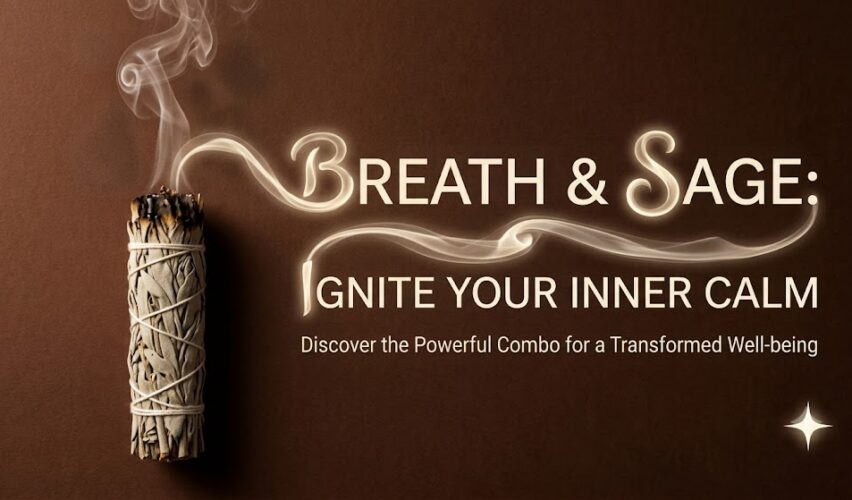
Breathwork and sage are a powerful combo because they work on two different layers of stress at the same time: sage smoke shifts the environment (scent, ritual cue, airborne microbial load), while breathwork shifts your physiology (heart rate, vagal tone, nervous system state). Used together sage first to clear the space, breathwork second to clear the body they create a faster, more complete reset than either practice alone.
If you only read one paragraph, that’s the one. Everything below unpacks it, gives you exact protocols, and covers the safety gap almost every other article on this topic ignores.
Why This Topic Needs Its Own Article
Search “sage burning benefits” and you’ll get hundreds of near-identical posts: history, how to hold the bundle, which crystal to place nearby. Search “breathwork and sage” specifically, and the content thins out fast most articles mention breathwork as a throwaway line (“take a deep breath while smudging”) without ever explaining:
- Which breathwork technique to pair with which stage of a smudging ritual
- The physiological conflict between deep breathing and inhaling smoke (a real issue almost nobody addresses head-on)
- A tested sequence order of operations, timing, and duration
- Who should not combine the two, and what to do instead
- The actual mechanism vagal tone, olfactory-limbic response, and airway irritation rather than vague “energy” language
This article fills that gap. It treats breathwork and sage as two distinct tools with a specific, safe way to combine them not as a single vague wellness aesthetic.
What Is the Breathwork and Sage Combo, Exactly?
The breathwork and sage combo is a two-part reset ritual:
- Sage stage burning dried sage (commonly white sage, though ethical sourcing matters more on that below) to change the scent and energetic “feel” of a space, using smoke as a sensory anchor.
- Breathwork stage — a structured breathing pattern (box breathing, diaphragmatic breathing, extended exhale, or alternate nostril breathing) practiced immediately after the smoke clears, to actively shift your nervous system into a calmer state.
The combo isn’t “breathe while you smudge.” It’s a sequence: clear the room, let the air settle, then breathe with intention in the refreshed space. That distinction matters more than most guides let on, and it’s the core of why this pairing works better than doing either one in isolation.
The Science Gap: What’s Actually Happening in Your Body
Most sage articles stop at “it’s calming.” Here’s the mechanism, in plain terms:
What sage smoke does
- Olfactory-limbic trigger: Scent bypasses conscious thought and hits the amygdala and hippocampus directly, which is why a familiar smell (like sage) can shift mood almost instantly.
- Ritual cueing: The act of lighting, waving, and setting an intention gives your brain a clear “start” signal similar to how a bedtime routine cues sleep.
- Airborne particulate reduction: Some small studies on medicinal smoke report a temporary reduction in airborne bacterial count, though this is not a substitute for ventilation or cleaning, and research in this area is limited and not conclusive for general use.
What breathwork does
- Vagal tone activation: Slow, extended exhales stimulate the vagus nerve, which lowers heart rate and shifts you from sympathetic (“fight or flight”) to parasympathetic (“rest and digest”) state.
- CO2 tolerance and calm: Techniques like box breathing regulate carbon dioxide levels, which directly reduces the physical sensation of anxiety.
- Present-moment anchoring: Counting breaths occupies the prefrontal cortex just enough to interrupt spiraling thoughts.
The overlap most articles miss
Sage sets the scene. Breathwork changes the state. One without the other is incomplete a beautifully scented room with a still-racing nervous system, or a calm nervous system in a space that still feels “heavy.” Combined, and sequenced correctly, they close both gaps.
The Safety Conversation Nobody Has: Smoke + Deep Breathing
This is the single biggest content gap on this topic, and it deserves its own section instead of a footnote.
Deep, slow breathing increases the volume of air and anything suspended in it that reaches your lower lungs. That means practicing deep breathwork while actively inhaling sage smoke can irritate the airway, especially for people with asthma, allergies, or sensitivity to smoke.
The fix is sequencing, not avoidance:
- Smudge first, in a well-ventilated space, with a window or door cracked.
- Let the smoke fully clear ideally 5–10 minutes before beginning any breathwork.
- Breathe the residual scent, not the smoke. By the time you start your breathing practice, you should be inhaling clean air lightly perfumed by sage, not active smoke.
- If you have asthma, COPD, are pregnant, or are breathing for someone else (a baby, an elderly person, a pet), skip the smoke stage entirely and use a sage-scented mist, sage essential oil diffused at a distance, or simply the residual scent left in fabric then move on to breathwork alone.
This one adjustment separating “smoke time” from “breath time” is what makes the combo safe and is almost never mentioned elsewhere.
The Exact Sequence: How to Combine Breathwork and Sage
Step 1: Set a single-sentence intention
Before lighting anything, name what you’re clearing and what you want in its place. One sentence. Vague intentions produce vague rituals.
Step 2: Smudge with ventilation
Open a window. Light the sage, let it smoke (not flame), and move it through the space with a feather or your hand, paying attention to corners and doorways.
Step 3: Extinguish and air out
Press the sage into a heatproof dish to extinguish it. Leave the window open. Give the room 5–10 minutes to clear.
Step 4: Sit down and breathe
Once the air is clear (light scent, no visible smoke), sit or lie down and begin your chosen breathwork pattern (see table below).
Step 5: Close with stillness
After your breathing rounds, sit in silence for 60 seconds before resuming activity. This is where most people rush and where most of the benefit is lost.
Which Breathwork Technique Pairs With Which Intention
| Intention | Best Breathwork Technique | How To Do It | Why It Fits |
|---|---|---|---|
| Calming an anxious space (after conflict) | Extended exhale breathing | Inhale for 4 counts, exhale for 8 counts. Repeat for 2–3 minutes. | Long exhales directly stimulate the vagus nerve, lowering heart rate fast. |
| Morning reset / starting the day | Box breathing | Inhale 4, hold 4, exhale 4, hold 4. Repeat 4–8 rounds. | Structured and alert — grounds without sedating. |
| Releasing stagnant energy / letting go | Diaphragmatic (belly) breathing | Hand on belly, inhale so the belly rises, exhale slowly through the mouth. 5–10 breaths. | Full breaths activate the whole respiratory system, matching the “full clearing” intention of the smudge. |
| Balancing mood before meditation | Alternate nostril breathing (Nadi Shodhana) | Close right nostril, inhale left; close left, exhale right; inhale right, exhale left. Repeat. | Traditionally used to balance the nervous system before focused practice. |
| Sleep-space clearing at night | 4-7-8 breathing | Inhale 4, hold 7, exhale 8. Repeat 4 rounds. | Popularized for sleep onset; pairs naturally with an evening smudge. |
A Full Sample Ritual: 15-Minute Sacred Reset
- (0:00–0:30) Set your one-sentence intention.
- (0:30–3:00) Smudge the space with a window cracked, moving clockwise from the entry point.
- (3:00–3:30) Extinguish the sage, place it in a heatproof dish.
- (3:30–8:30) Leave the room briefly or sit quietly while the air clears.
- (8:30–12:30) Sit down and practice box breathing (4-4-4-4) for 4–8 rounds, or swap in the technique from the table above that matches your intention.
- (12:30–13:30) One minute of silence, eyes closed.
- (13:30–15:00) Journal one line: what shifted.
This structure is what most “smudging ritual” posts are missing a timed, repeatable protocol rather than a loose suggestion to “breathe deeply.”
Who Should Modify or Skip This Combo
- Asthma or respiratory conditions: Skip the smoke stage; use scent (sage sachets, diffused oil) plus breathwork alone.
- Pregnancy: Some breathwork techniques involving breath holds (like box breathing) are generally advised against without guidance during pregnancy; stick to gentle diaphragmatic breathing and ventilate any smoke thoroughly, or avoid smoke entirely.
- Panic disorder or history of hyperventilation-triggered panic: Extended breath holds can sometimes trigger symptoms in sensitive individuals; start with simple slow exhales rather than structured hold patterns, and stop if you feel light-headed.
- Homes with infants, elderly residents, or pets: Smoke lingers in small lungs and sensitive respiratory systems longer than in healthy adults. Ventilate aggressively or skip smoke and use residual-scent methods instead.
- Fire-restricted spaces (apartments, offices, dry regions with fire bans): Use a sage mist spray or diffuser, then move directly to breathwork.
A Word on Sourcing and Respect
White sage is native to a specific region and has deep ceremonial significance in Indigenous traditions; overharvesting has made it vulnerable in the wild. If you’re incorporating sage into a personal wellness routine, buy from ethically sourced or cultivated suppliers (ideally Indigenous-owned businesses) rather than wild-harvested bundles, and hold the practice with the same respect you’d want shown to any tradition you’ve borrowed from.
Frequently Asked Questions
Can I do breathwork while the sage is actively smoking? It’s not recommended. Deep breathing draws more smoke into the lower lungs, which can cause irritation. Let the smoke clear for 5–10 minutes first, then begin breathwork in the lightly scented, smoke-free air.
Does sage smoke actually improve air quality? Some limited research has looked at antimicrobial effects of certain medicinal smoke, but findings are preliminary and not a substitute for ventilation, air filtration, or cleaning. Treat any air-quality benefit as a bonus, not the main reason for the practice.
What’s the best breathwork technique for beginners pairing with sage? Diaphragmatic (belly) breathing. It requires no counting or breath-holding, making it the easiest entry point immediately after a smudging ritual.
How long should I wait between smudging and starting breathwork? Five to ten minutes in a ventilated space is generally enough for visible smoke to clear, leaving only a light scent behind.
Is this combo backed by science, or is it purely spiritual? Breathwork’s effects on heart rate variability and the nervous system are well-documented. Sage’s effects are primarily scent-based (limbic response) and ritual-based (behavioral cueing); the “energy clearing” claim is a spiritual framework, not a scientific one. The combo works because both halves are legitimate on their own terms one physiological, one psychological/ritual not because smoke itself alters your biology.
Can I use sage spray or essential oil instead of burning sage? Yes, and it’s the safer choice for anyone with respiratory sensitivity, in fire-restricted areas, or around children and pets. You lose the smoke ritual but keep the scent-triggered calming effect, and you can move straight into breathwork without a waiting period.
Key Takeaways
- Breathwork and sage work through tw0 different systems scent/ritual and nervous system regulation which is exactly why combining them is more effective than either alone.
- Sequence, don’t overlap: smudge first, ventilate, then breathe.
- Match your breathing technique to your intention using the table above rather than breathing arbitrarily.
- Respect the sourcing of white sage, and modify or skip the smoke stage if you have respiratory sensitivities, are pregnant, or share your space with children or pets.
This combo isn’t about mysticism replacing biology, or biology replacing meaning it’s about using each tool for what it’s actually good at, in the right order.