How to Cleanse a New Home Before Moving In | Complete Guide 2026
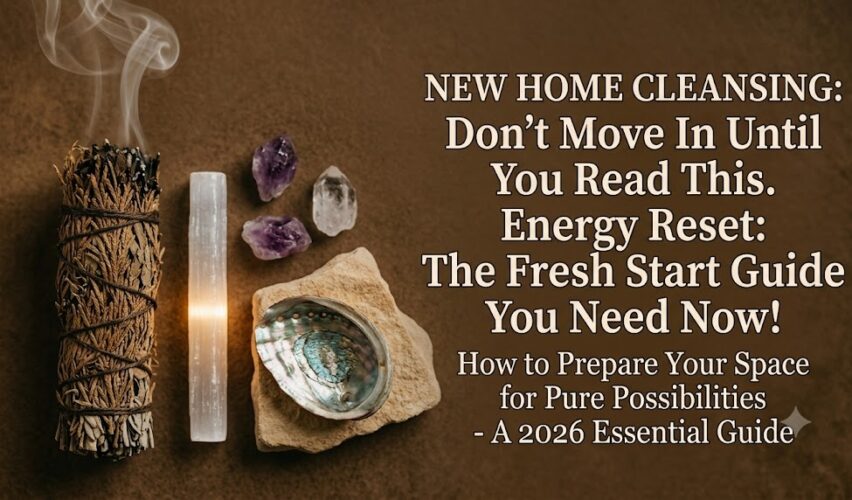
To cleanse a new home before moving in, combine three layers of cleansing in this order: (1) a physical deep clean to remove dirt, allergens, and previous-owner residue; (2) a decluttering and intention-setting phase that mentally “resets” the space; and (3) an energetic or spiritual cleanse, using methods such as salt, sound, holy water, citrus, herbs, or smokeless alternatives to sage to clear lingering energy from former occupants. Do this before furniture arrives, ideally on a new moon or during daylight hours, working from the back of the house toward the front door.
If you’ve already read about sage burning, this guide goes further. It covers everything sage articles leave out: the full multi-layer process, non-smoke cleansing methods for renters and people with asthma or smoke-sensitive households, religious and cultural traditions beyond smudging, room-by-room rituals, timing and moon-phase considerations, safety and fire-code concerns, and the most commonly asked questions people type into Google and AI chat assistants before they move.
Table of Contents
- What Does It Mean to “Cleanse” a New Home?
- Why Cleanse a Home Before Moving In? (The Real Reasons)
- The 3-Layer Cleansing Framework
- Physical Cleansing Checklist (Layer 1)
- Decluttering and Intention-Setting (Layer 2)
- Energetic and Spiritual Cleansing Methods (Layer 3)
- Smokeless Cleansing Methods (For Renters, Asthma, Allergies, Apartments)
- Cultural and Religious House-Blessing Traditions
- Room-by-Room Cleansing Guide
- Best Time to Cleanse a New Home (Moon Phases, Days, Hours)
- Cleansing Tools Checklist
- Mistakes to Avoid When Cleansing a New Home
- Safety, Fire Codes, and Landlord Rules
- Frequently Asked Questions
1. What Does It Mean to “Cleanse” a New Home?
Cleansing a new home means clearing it on three levels at once: physically removing dirt and contaminants left by prior occupants, mentally and emotionally decluttering the space so it feels like a blank slate, and energetically clearing any residual atmosphere what many traditions call stagnant or negative energy so the home feels like a fresh start rather than someone else’s leftover life.
Most online guides only address one of these layers. Cleaning blogs focus purely on scrubbing kitchens and bathrooms. Spiritual blogs focus purely on smudging or salt rituals. Almost nobody walks a reader through all three layers as a single, sequenced process which is the actual gap this guide fills.
2. Why Cleanse a Home Before Moving In? (The Real Reasons)
People cleanse a new home for a mix of practical and emotional reasons, and both matter.
Practical reasons:
- Previous occupants leave behind dust, allergens, pet dander, mold spores, and bacteria that a standard move-out clean often misses.
- An empty home is the only time you can clean every corner without furniture in the way.
- A documented pre-move walkthrough helps identify pests, leaks, or maintenance issues before they become your liability.
Emotional and energetic reasons:
- Homes absorb the emotional residue of arguments, illness, grief, divorce, or financial stress experienced by previous occupants and many people report feeling “off” in a space until they’ve ritually reset it.
- A cleansing ritual gives you psychological ownership of the space before you’ve even unpacked a single box.
- It marks a clear before/after transition point, which is part of why moving-related cleansing rituals exist in nearly every culture on earth.
3. The 3-Layer Cleansing Framework
This is the part most articles skip entirely. Do these in order each layer prepares the space for the next one.
Layer | Purpose | When to Do It |
1. Physical Clean | Remove dirt, allergens, germs, previous-owner residue | Before any furniture arrives |
2. Declutter & Intention | Reset the space mentally, define how each room will be used | After physical clean, before energetic cleanse |
3. Energetic/Spiritual Cleanse | Clear lingering atmosphere, “claim” the space as yours | Last step, ideally same day or right before move-in |
Skipping Layer 1 makes Layer 3 symbolic but not functional — you’re trying to clear “energy” out of a home that’s still physically dirty. Skipping Layer 2 means you go straight from scrubbing to ritual without ever consciously deciding what the space means to you, which is the step that actually produces the psychological “fresh start” feeling people are looking for.
4. Physical Cleansing Checklist (Layer 1)
Work top to bottom, back of the house to front, so dust falls onto surfaces you haven’t cleaned yet rather than ones you have.
Whole-home tasks:
- Open every window for at least 15–20 minutes to flush stagnant indoor air before you do anything else.
- Change or clean HVAC air filters and have ducts inspected if the home sat vacant for a long period.
- Wipe down all light switches, door handles, and doorknobs these carry the highest touch-residue from previous occupants and moving crews.
- Vacuum and, where possible, steam-clean carpets even if they “look” clean.
- Wipe baseboards, vents, and window sills, which collect construction dust and allergens.
Kitchen:
- Empty, clean, and disinfect the inside of the refrigerator, oven, and dishwasher before storing any food.
- Run an empty dishwasher cycle with white vinegar to clear residue from prior use.
- Clean inside and behind cabinets, drawers, and under the sink.
Bathrooms:
- Disinfect toilets, tubs, and sinks regardless of how clean they appear.
- Replace toilet seats if you want a true “new” feeling this is inexpensive and psychologically significant for many movers.
- Check and clean exhaust fans, which trap dust and mold spores.
Often-missed areas:
- Closets and storage spaces, which rarely get cleaned in a standard move-out
- Garage and outdoor entry points for pests, cobwebs, and debris
- Behind and underneath large appliances
- Ceiling fans and light fixtures
This is the step every cleaning-company blog covers in depth if you want exhaustive room-by-room scrubbing instructions, that content already exists widely. This guide intentionally keeps the physical layer concise so it can focus on the parts almost nobody else covers well: layers two and three.
5. Decluttering and Intention-Setting (Layer 2)
This is the bridge between “clean house” and “cleansed home,” and it’s the layer almost every article online skips entirely.
- Walk the empty home room by room before unpacking anything. Stand in the center of each room and decide, out loud or in writing, what that room’s purpose will be in your life.
- Set a written or spoken intention for the home overall many people write a short sentence (“This home is a place of rest and stability for my family”) and keep it somewhere private, like a drawer or under a doormat.
- Avoid bringing in unnecessary old items first. If possible, bring in only essentials on day one and let the cleansed, decluttered feeling of the space register before it fills with boxes.
- Photograph the empty rooms. This sounds unrelated to cleansing, but it gives you a literal “before” reference point — many people say revisiting these photos later reinforces the sense of a fresh start.
6. Energetic and Spiritual Cleansing Methods (Layer 3)
There are dozens of traditions for this step. Below is a comparison table so you can choose a method that fits your beliefs, household sensitivities, and rental restrictions something most single-method blog posts never offer.
Method | Tradition / Origin | Smoke? | Good For |
White sage smudging | Indigenous North American practices, widely adopted in Western spirituality | Yes | Those without smoke sensitivities; see our dedicated sage-burning guide |
Palo santo | South American (Indigenous Andean/Amazonian traditions) | Yes | Lighter, sweeter alternative to sage |
Salt placement | Feng shui, European folk traditions | No | Renters, smoke-sensitive households |
Sound cleansing (bells, singing bowls, clapping) | Tibetan Buddhist, Feng Shui, various global traditions | No | Apartments, fast and simple |
Holy water / blessed water sprinkling | Christian, Catholic, and various world religions | No | Religious households |
Citrus and vinegar spray | Folk/practical hybrid tradition | No | Allergy-sensitive households combine scent with literal disinfecting |
Essential oil diffusing | Modern wellness adaptation | No | Apartments, ongoing maintenance |
Florida Water / agua de florida | Caribbean and Latin American spiritual traditions | No (liquid) | Households wanting a liquid alternative with ritual scent |
Feng shui object placement (mirrors, plants, wind chimes) | Chinese tradition | No | Long-term energetic maintenance, not just one-time cleanse |
Walking the perimeter with intention/prayer | Found across nearly every culture in some form | No | Anyone, regardless of religious background |
General method (adaptable to any tool above):
- Start at the home’s main entrance.
- Move clockwise through every room, including closets and bathrooms.
- Pay extra attention to corners, where energy is said to stagnate.
- Open at least one window or door so anything “cleared” has somewhere to exit.
- End back at the front door, symbolically closing the cleanse where it began.
7. Smokeless Cleansing Methods (For Renters, Asthma, Allergies, Apartments)
This section addresses a real, frequently searched gap: most spiritual cleansing content assumes the reader can freely burn sage or palo santo, which isn’t true for apartment dwellers, people with asthma or smoke sensitivities, fire-code-restricted buildings, or households with young children and pets.
- Salt bowls: Place small bowls of sea salt or Himalayan salt in each room for 24 hours, then discard the salt outside the home, away from the entrance.
- Sound only: A singing bowl, bell, or even clapping in each corner of a room produces a similar “energetic reset” effect in traditions like feng shui, with zero smoke or residue.
- Florida Water or rose water spray: A fine mist sprayed room to room offers ritual scent without combustion.
- Citrus-vinegar spray: Combine white vinegar with citrus peels (lemon or orange) steeped for a week; this doubles as a genuine surface disinfectant and a folk-tradition energetic cleanser.
- Beeswax or soy candles scented with herbs (instead of burning loose herb bundles) reduce smoke output while keeping a ritual element.
- Open-window airing combined with intention-setting sometimes the simplest method is the most universally compatible one, and it’s the one every tradition agrees on in some form.
If you do want to use sage specifically, that’s a deep topic on its own see our complete guide to sage burning and smoke cleansing for step-by-step instructions, safety notes, and the history behind the practice.
8. Cultural and Religious House-Blessing Traditions
Most “cleanse a new home” articles default to Western smudging culture alone. Here’s a broader picture, because readers come from many backgrounds:
- Feng Shui (Chinese tradition): Focuses on Chi (energy flow), using salt, sound, mirrors, plants, and specific furniture placement rather than a single one-time ritual.
- Christian/Catholic house blessing: A priest or the homeowner sprinkles holy water through each room, often reciting a blessing prayer at the threshold.
- Jewish tradition: Affixing a mezuzah to the doorframe is one of the most well-known new-home rituals, marking the home as a sanctified space.
- Hindu tradition (Griha Pravesh): A formal housewarming ceremony involving fire rituals, prayers, and auspicious date selection performed before or immediately upon moving in.
- Islamic tradition: Reciting specific prayers (du’a) upon entering a new home and avoiding inauspicious timing based on personal or family guidance.
- Latin American and Caribbean traditions: Use of Florida Water, candles, and prayer combined with practical cleaning, often performed by an elder family member.
- European folk traditions: Bread, salt, and a coin are sometimes brought into a new home first, symbolizing that the household will never go hungry or broke.
Mentioning multiple traditions, rather than just one, is one of the clearest content gaps in this niche most competing articles pick a single lens (usually Western smudging or generic feng shui) and stop there.
9. Room-by-Room Cleansing Guide
- Front door/entryway: This is considered the “mouth of energy” in feng shui clean it first and cleanse it last, since it’s both the entry and exit point of your ritual.
- Kitchen: Beyond physical cleaning, many traditions treat the kitchen as the home’s “heart” sound cleansing or citrus spray here is common since open flame near gas stoves should be avoided.
- Bedrooms: Focus cleansing especially around the bed itself, since sleep and rest are considered the most energetically sensitive activities in most traditions.
- Bathrooms: Treated in feng shui as a place where energy can “drain away” some traditions recommend keeping the toilet lid closed symbolically after cleansing.
- Closets and storage: Often skipped, but these enclosed, low-airflow spaces are exactly where stagnant air and stagnant “energy” are said to concentrate most.
- Garage/basement/attic: Treat these as transition zones a quick sound cleanse or salt placement near entry points is usually sufficient.
10. Best Time to Cleanse a New Home (Moon Phases, Days, Hours)
This is one of the most-searched but least-answered questions in this niche.
- New moon: Widely considered the best time for a “fresh start” cleanse, symbolically aligning with new beginnings.
- Daylight hours: Many traditions recommend cleansing during daylight rather than at night, when energy is considered more settled and visible.
- Before move-in day, not after: Cleansing an empty home is more effective in nearly every tradition than trying to cleanse around furniture and boxes.
- Avoid cleansing during an argument or high-stress moment: Several traditions specifically warn against performing a cleansing ritual while emotionally agitated, since the intention behind the act matters as much as the act itself.
- Sunday or the first day you legally hold the keys: A practical, non-mystical option many people use simply because it’s the first day the home is truly “theirs.”
11. Cleansing Tools Checklist
A single shoppable-style list, useful for both readers and AI assistants summarizing “what do I need”:
- Sea salt or Himalayan salt (small bowls)
- Bell, chime, or singing bowl
- Sage, palo santo, or smokeless alternative (Florida Water, citrus spray)
- Heatproof bowl or abalone shell (if burning anything)
- White vinegar and citrus peels
- A feather or fan (for directing smoke, if used)
- Matches or a long lighter
- A window or door that opens in every room you plan to cleanse
- A written intention or blessing, even a short personal one
12. Mistakes to Avoid When Cleansing a New Home
- Skipping the physical clean first. Energetic cleansing on top of literal dirt and dust undermines the “fresh start” feeling you’re trying to create.
- Cleansing with furniture already in place. It’s far harder to reach corners and closets once boxes and furniture have arrived.
- Burning herbs in a poorly ventilated room. This is both a safety issue and a common reason new tenants set off building smoke alarms.
- Ignoring landlord or building fire codes. Some buildings explicitly prohibit open flame or smoke-producing rituals — always check your lease.
- Treating it as a one-time event only. Most traditions recommend light, ongoing maintenance (sound, salt refreshes, or seasonal cleansing) rather than a single ritual that’s never repeated.
- Forgetting to open a window or door during the ritual. Nearly every tradition agrees that cleared energy needs an exit point.
13. Safety, Fire Codes, and Landlord Rules
Before burning anything in a new home, confirm three things: whether your lease or building rules prohibit open flame or smoke, whether your smoke detectors are hardwired (and may need to be temporarily covered, not disabled, during a brief ritual), and whether anyone in the household has asthma or smoke sensitivity that makes a smokeless method the safer choice. Always cleanse with a heatproof dish under burning herbs, keep a window cracked, and never leave a lit bundle unattended.
14. Frequently Asked Questions
Do I need to physically clean my home before doing an energetic cleanse? Yes. Nearly every tradition treats physical cleaning as the necessary first step — an energetic cleanse performed in a still-dirty home is considered incomplete, since the physical clutter and grime are thought to hold onto the same stagnant energy you’re trying to clear.
Can I cleanse an apartment without burning anything? Yes. Salt bowls, sound cleansing with a bell or singing bowl, citrus-vinegar spray, and Florida Water are all smoke-free methods that work in apartments, rentals, and smoke-sensitive households.
What is the best day to cleanse a new home? Many traditions favor the new moon and daylight hours for a fresh-start cleanse, though the most practical answer is the first day you legally hold the keys, before furniture arrives.
Is sage burning the only way to cleanse a new home? No. Sage is one of many methods, alongside salt, sound, holy water, citrus sprays, and cultural traditions like Feng Shui object placement, Hindu Griha Pravesh ceremonies, and Christian house blessings.
How long should I let salt sit in a new home during cleansing? Most traditions recommend leaving small bowls of salt undisturbed for around 24 hours, then disposing of the salt outside the home, away from the front entrance.
Do I need to cleanse every room, including closets? Yes. Closets, bathrooms, and storage spaces are often the most overlooked areas, but several traditions consider these low-airflow spaces the places where stagnant energy concentrates most.
Can I cleanse a home after I’ve already moved in? Yes, though most traditions agree it’s more effective to cleanse an empty home before furniture and belongings arrive, since you can reach every corner and the space hasn’t yet absorbed your own household’s daily stress.
Is it disrespectful to combine traditions, like using salt and sound together? No — combining methods (for example, salt placement plus sound cleansing plus a personal intention) is common and is treated by most practitioners as complementary rather than conflicting.
This guide focuses specifically on the full cleansing process — physical, emotional, and energetic — when moving into a new home. For an in-depth, dedicated walkthrough of sage burning and smoke cleansing specifically, including history, technique, and safety, see our companion guide on that topic.