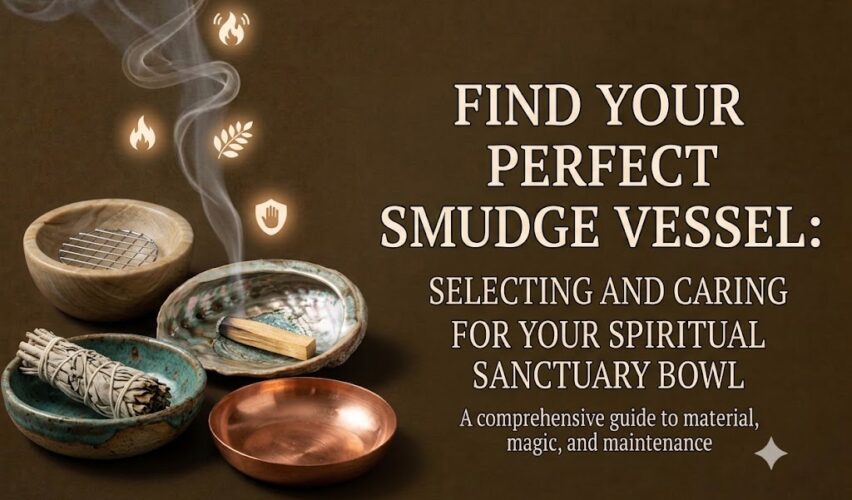
The best smudging bowls and dishes are made from fireproof, non-porous materials abalone shell, ceramic, soapstone, or cast metal large enough to hold a smoldering sage bundle plus a layer of sand and catch falling ash. Abalone shells suit water-element rituals, ceramic and soapstone suit grounding earth-element practice, and metal or stone burners suit daily, high-heat use. Never use glass, wood, or plastic.
Why the Vessel Matters as Much as the Sage
Most guides to smudging focus on which herb to burn. Almost none focus on what you burn it in even though the vessel is the single biggest factor in whether your ritual is safe, sustainable, and repeatable. A smudging bowl or dish isn’t a prop. It’s the piece of equipment that determines whether embers stay contained, whether your surfaces stay undamaged, and whether the tool itself becomes part of the ritual’s meaning over time.
This guide covers what other roundups skip: the real functional difference between a bowl, dish, shell, and tray; how material choice maps to spiritual intention; a sizing framework that actually works; ethical sourcing concerns; and how to clean and re-cleanse the vessel itself not just the smoke coming out of it.
Smudging Bowl vs. Smudging Dish vs. Shell vs. Tray What’s the Difference?
These terms get used interchangeably online, but they describe genuinely different tools with different jobs:
Vessel Type | Depth | Best For | Limitation |
Smudging Bowl | Deep (2–4″) | Loose herbs, resin, charcoal discs, longer rituals | Heavier, less portable |
Smudging Dish | Shallow (under 1.5″) | Stick bundles, palo santo, quick sessions | Holds less sand/salt insulation |
Abalone Shell | Natural curve | Traditional Indigenous-style smudging, portability | Fragile edges, ethical sourcing concerns |
Smudging Tray/Plate | Flat | Multiple burning items at once, altar display | Poor ash containment if bumped |
Practical rule: if you’re walking room to room, a shallow dish or shell is easier to carry one-handed. If you’re doing a stationary, longer ritual with loose herb or resin, a deeper bowl performs better and is safer.
Material Comparison: Heat Safety, Symbolism, and Cost
Material | Heat Safety | Spiritual Association | Typical Price Range | Durability |
Abalone shell | Good (natural fire-resistance) | Water element, traditional/ancestral | $8–$35 | Moderate — chips/cracks with drops |
Ceramic/clay | Good if kiln-fired and unglazed on the inside | Earth element, grounding | $10–$40 | Moderate |
Soapstone | Excellent | Earth element, stability, protection | $15–$45 | High |
Cast metal (brass, copper, iron) | Excellent | Fire element, transformation | $12–$50 | Very high |
Terracotta | Good, unglazed only | Earth element, simplicity | $5–$20 | Low–moderate (porous, can crack) |
Thick heat-resistant glass (Pyrex-type) | Conditional — thin glass is unsafe | Air/clarity (modern association, not traditional) | $8–$25 | Low risk of thermal shock if thin |
Wood, plastic, thin glass | Unsafe — do not use | — | — | — |
The one non-negotiable rule every credible source agrees on: the vessel must be fireproof. A bowl that isn’t rated or built for direct heat can crack, shatter, or scorch a surface. If you’re repurposing a household bowl, only use thick, oven-safe glass or unglazed stoneware and even then, add a sand or salt base layer for insulation.
Choosing by Spiritual Intention: Elemental Correspondence
If your practice draws on elemental symbolism, material choice can reinforce intention rather than just contain embers:
- Water element (emotional release, intuition): abalone shell
- Earth element (grounding, stability): ceramic, soapstone, terracotta
- Fire element (transformation, energy shifts): brass, copper, cast iron
- Air element (mental clarity, communication): thick glass or open-shape trays that let smoke disperse widely
This is a personal-practice layer, not a safety requirement but it’s one of the most-asked questions in smudging communities and rarely answered in existing buying guides.
How to Size a Smudging Bowl or Dish Correctly
Most guides say “big enough to hold your bundle.” Here’s a sizing framework that’s actually useful:
- Small stick bundles (3–4 inches): a 3–4″ dish or small shell is sufficient
- Standard bundles (4–6 inches): use a 4–5″ bowl or dish with at least 1″ of depth for ash and sand
- Loose herb or resin burning: choose a bowl at least 4″ wide and 2″ deep to hold a charcoal disc plus insulating sand
- Palo Santo sticks (which relight easily and drip less ash): a shallow dish under 3″ works fine
- Multi-person or room-to-room rituals: size up by at least 1″ in every dimension to reduce spill risk while walking
Rule of thumb: your vessel should have at least 1 inch of clearance around the burning item in every direction.
What to Look for When Buying
- Unglazed interior or natural stone surface glazed interiors can trap heat unevenly and are more prone to cracking.
- A flat, stable base tippy shells or curved-bottom bowls are an ember-spill risk; look for a flat foot or pair with a stand.
- No hairline cracks inspect ceramic and stone pieces closely before buying, especially secondhand or vintage finds.
- Weight appropriate to use heavier stone and metal bowls resist tipping; lighter shells need a stable resting surface.
- Sustainable abalone sourcing wild abalone populations are overharvested in parts of the world. Look for suppliers who disclose farmed or byproduct sourcing (from the seafood industry) rather than wild-harvested shells with no sourcing information.
- Size-to-price fit larger stone and metal bowls justify a higher price point; a $40+ price tag on a 3-inch shell is a markup red flag, not a quality signal.
Budget tiers:
- Under $15: small abalone shells, basic terracotta dishes
- $15–$30: mid-size ceramic bowls, soapstone dishes, wholesale-grade shells
- $30+: hand-carved soapstone, artisan ceramic, cast brass burners with lids or handles
Setting Up Your Vessel Safely
- Add a ½-inch layer of sand, salt, or ash from a previous session to the bottom. This insulates the vessel and helps extinguish embers on contact.
- Place the bowl on a heatproof surface not directly on wood furniture or fabric, even if the bowl itself is rated for heat.
- Keep the bowl within reach at all times during a ritual; never leave a smoldering bundle unattended.
- Use a feather, fan, or your hand to move smoke never blow directly into the bowl, which can send sparks airborne.
- To extinguish, press the smoldering end firmly into the sand layer until no smoke rises.
Cleaning and Maintaining Your Smudging Bowl
This is the part almost no other guide addresses, and it affects both the vessel’s lifespan and its role in your ritual.
Physical cleaning:
- Let ash cool completely (at least 30 minutes) before handling.
- Empty ash and sand outdoors or into a metal trash container never into a regular indoor bin while still warm.
- Wipe ceramic, soapstone, and metal bowls with a dry or slightly damp cloth. Avoid soaking porous materials like terracotta and unsealed clay, which can absorb water and crack when next heated.
- For stubborn soot on metal or stone, a soft brush with a small amount of baking soda works without scratching the surface.
- Replace the sand/salt insulation layer every few sessions, or sooner if it becomes saturated with ash residue.
Spiritual re-cleansing of the vessel itself: Many practitioners cleanse everything except the tool that’s been holding the smoke. If your practice includes energetic maintenance, consider:
- Passing the empty bowl briefly through a new smudge stick’s smoke before refilling it with sand
- Resting it in indirect moonlight overnight
- Setting an intention aloud before its next use
This isn’t a safety step it’s a practice layer that repeat visitors specifically search for and rarely find covered.
Common Mistakes to Avoid
- Using a decorative or kitchen bowl without checking heat tolerance. Many “looks ceramic” bowls are glazed earthenware not rated for open flame contact.
- Skipping the sand or salt layer. This is the single most common cause of scorched furniture and cracked bowls.
- Choosing a bowl too shallow for loose herb or resin. Shallow dishes are built for stick bundles, not charcoal discs.
- Buying a wild-harvested abalone shell with no sourcing disclosure, contributing to unsustainable harvesting pressure.
- Letting ash cool in the bowl indoors near flammable material instead of transferring it once cooled.
Frequently Asked Questions
Can I use a regular bowl for smudging? Only if it’s made from thick, heat-resistant material like unglazed stoneware or oven-safe glass, and even then, add a sand or salt base layer first. Thin glass, plastic, and wood are not safe substitutes.
What is the best material for a smudging bowl? There’s no single “best” abalone shell suits water-element, traditional-style practice; ceramic and soapstone suit grounding, everyday use; and metal burners suit frequent or heavy use due to their durability.
Do I need sand in my smudging bowl? Yes, a half-inch layer of sand or salt insulates the vessel from direct heat and helps fully extinguish embers, reducing both fire risk and wear on the bowl.
What size smudging bowl do I need? For a standard 4–6 inch sage bundle, choose a bowl at least 4–5 inches wide with 1 inch of depth. Loose herb or resin burning needs a deeper bowl (2+ inches) to safely hold a charcoal disc.
Is it okay to use a smudging bowl for incense too? Yes, most fireproof smudging bowls and dishes double safely as incense or resin burners, provided there’s enough insulating sand or ash at the base.
How do I clean ash out of a smudging bowl? Let the ash cool for at least 30 minutes, then empty it outdoors or into a metal container. Wipe non-porous bowls with a dry or damp cloth; avoid soaking porous materials like terracotta.
Are abalone shells ethical to use for smudging? It depends on sourcing. Wild-harvested abalone populations face overharvesting pressure in some regions, so look for suppliers who disclose farmed or byproduct sourcing rather than shells with no origin information.
Can a smudging bowl crack from heat? Yes, especially glazed ceramic, thin glass, or unfired clay. A sand or salt insulating layer significantly reduces this risk, but only fireproof-rated materials should be used in the first place.
What’s the difference between a smudge bowl and a smudge dish? A bowl is deeper and better suited to loose herbs, resin, or charcoal discs, while a dish is shallow and better suited to stick bundles and quick, portable sessions.
Can I make my own smudging bowl? Yes, provided the material is genuinely fireproof unglazed terracotta, thick stoneware, or stone are viable DIY options. Test any repurposed bowl with a small ember first and always add an insulating sand layer.
Final Thoughts
The right smudging bowl or dish isn’t just a container for ash it’s the safety layer and the symbolic anchor of the whole ritual. Choosing by material, sizing it to your actual practice, and maintaining it (both physically and energetically) will make the vessel last longer and mean more, session after session.